Quantitative Methods and Collaborative Research
Designing informative studies under practical constraints
As I study STEM research, I continually work with learners and educators design experiments that are still scientifically valid, but more sensitive to more stringent resource constraints. I have also felt a personal imperative to cultivate an insider perspective in order to theorize the experience adequately for scientist education.
My training in applied mathematics and quantitative research methodology supports my science education program and several interdisciplinary collaborations. I work with longitudinal models, Monte Carlo simulations, experimental design, educational measurement, and large-scale assessment.
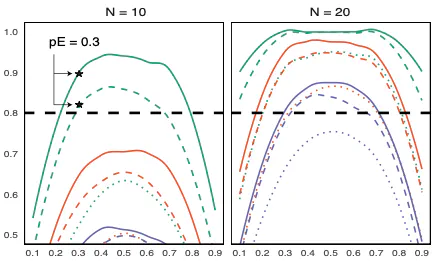
My current quantitative work examines reduced longitudinal experiments: how much inferential strength can be retained when a design must be less logistically demanding. This question matters in settings such as action research and high-school STEM projects where time, participants, and material resources are often constrained. A manuscript on reduced longitudinal experiments is currently under review, with a preprint available.
Similarly, I have also examined incomplete block designs used in international large-scale assessments such as PISA and the consequences of different approaches to differentiated longitudinal measures.